As temperatures drop across Northern Virginia, your thermostat becomes one of the most frequently used controls in your home. You turn up the heat when you wake up, lower it when you leave for work, and adjust it again when you settle in for the evening.
But could all those thermostat adjustments be affecting your energy bills?
The answer might surprise you. Changing your thermostat isn’t necessarily a bad thing. In fact, making the right adjustments at the right times can help you save money. The problem comes when your settings don’t match your household’s needs or the way your heating system operates.
Understanding how your thermostat affects energy consumption can help you stay comfortable without spending more than necessary this winter.
Does Constantly Changing Your Thermostat Waste Energy?
There’s a common misconception that frequently adjusting your thermostat automatically makes your heating system work harder and increases your energy bills.
That’s not quite how it works.
Your thermostat tells your heating system what temperature to maintain. When you raise the setting, the system runs until your home reaches that temperature. When you lower it, the system can run less frequently because it doesn’t need to maintain as much warmth.
The amount of energy your home uses depends largely on the difference between indoor and outdoor temperatures, how long your heating system operates, and the efficiency of your equipment.
For example, lowering your thermostat while you’re away for several hours can reduce heating costs because your home loses heat more slowly at a lower indoor temperature.
On the other hand, repeatedly raising the thermostat higher than you actually need can increase energy consumption.
The takeaway?
It’s not how often you touch the thermostat that matters most. It’s the temperatures you choose and how long you maintain them.
Turning Up the Heat Won’t Warm Your Home Faster
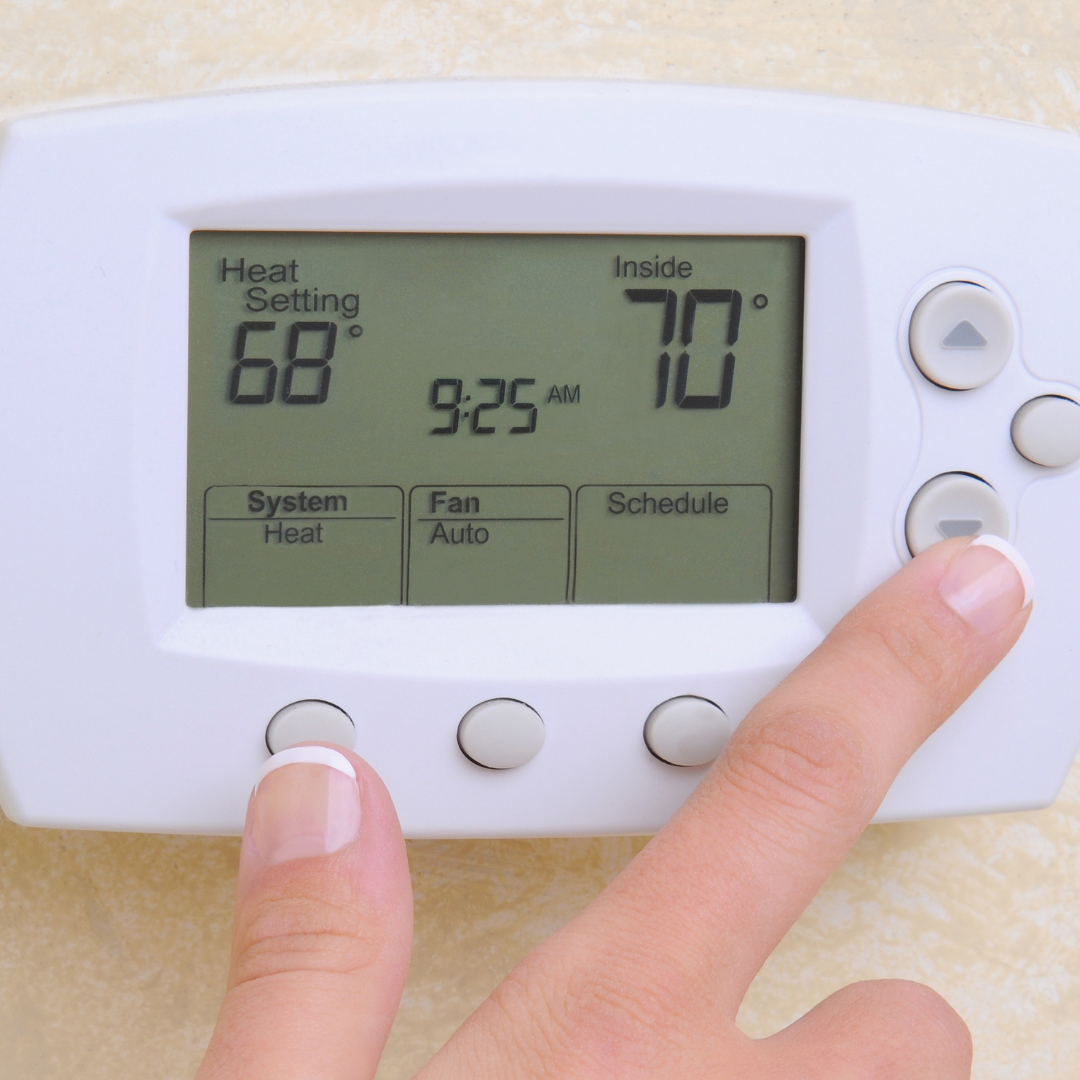
Picture this: It’s a chilly November morning, and you wake up to a house that’s colder than you’d like. Your thermostat reads 65°F, but you’d prefer 70°F.
Will setting it to 78°F warm your home faster?
For most conventional heating systems, the answer is no.
Your furnace doesn’t produce heat faster simply because you select a higher temperature. It continues heating until the thermostat reaches the requested setting.
If you forget to turn the temperature back down, your system may continue running longer than necessary, using additional energy to heat your home beyond your preferred comfort level.
Some modern heating systems use variable-speed equipment or advanced controls that can adjust their output based on heating demand. However, setting an unnecessarily high temperature still isn’t a reliable way to warm your home more efficiently.
A better approach: Set your thermostat to the temperature you actually want and give your heating system time to reach it.
What’s the Best Thermostat Setting for Winter?
There’s no single perfect temperature for every household. Your ideal thermostat setting depends on personal preferences, home insulation, activity levels, and the type of heating equipment you use.
However, the U.S. Department of Energy recommends starting around 68°F during winter while you’re home and awake, then adjusting for comfort.
For homes with conventional furnaces, lowering the temperature when you’re sleeping or away for extended periods can reduce energy consumption.
According to the Department of Energy, homeowners may save as much as 10% annually on heating and cooling by adjusting their thermostat 7–10°F from its normal setting for eight hours a day.
Actual savings vary based on your home, climate, heating system, and daily schedule.
Rather than constantly experimenting with different temperatures, find a comfortable setting and develop a routine that fits your household.
The goal isn’t to keep your home uncomfortably cold. It’s to avoid paying to maintain temperatures you don’t need.
How a Programmable Thermostat Can Help Lower Heating Costs
One of the easiest ways to manage your home’s heating schedule is with a programmable thermostat.
Instead of manually adjusting the temperature several times each day, you can create a schedule that automatically responds to your routine.
For example, you might program your thermostat to maintain a comfortable temperature when your family wakes up, lower it during the workday, and return to your preferred setting before everyone arrives home.
This approach helps eliminate unnecessary heating without requiring you to remember every adjustment.
Smart thermostats offer even more flexibility. Depending on the model, they may include smartphone controls, occupancy detection, learning features, and energy usage reports.
According to ENERGY STAR, certified smart thermostats save households approximately 8% on heating and cooling costs, or about $50 annually on average.
Those savings aren’t guaranteed for every home, but they demonstrate how better temperature management can make a measurable difference over time.
If you’re still using an older manual thermostat, upgrading may be worth considering, especially if your family’s schedule is fairly predictable.
Have a Heat Pump? Your Thermostat Strategy May Be Different
Not every Northern Virginia home relies on a traditional gas furnace. Many homes use electric heat pumps, which operate differently and require special consideration when adjusting thermostat settings.
Heat pumps transfer heat rather than generating it through combustion. Many systems also use auxiliary electric resistance heating when additional warmth is needed.
Large thermostat increases can sometimes activate this supplemental heating, which may consume considerably more electricity than the heat pump operating alone.
As a result, aggressively lowering the temperature and then raising it several degrees may not deliver the same energy savings you’d expect from a conventional furnace.
For many heat pump systems, maintaining a relatively consistent temperature or using modest setbacks is a more efficient approach.
Newer equipment and compatible smart thermostats may offer features designed specifically for heat pumps, including controls that minimize unnecessary auxiliary heating.
If you’re unsure which thermostat settings are best for your equipment, an HVAC professional can help you determine the most efficient approach.
When Thermostat Adjustments Don’t Solve the Problem
Sometimes homeowners repeatedly adjust their thermostat because their home simply isn’t comfortable.
Maybe the living room is warm, but the bedrooms are cold. Perhaps the heating system runs constantly without reaching the desired temperature. Or maybe the temperature displayed on the thermostat doesn’t seem to match how the room actually feels.
These situations may indicate a problem beyond your thermostat settings.
An incorrectly calibrated thermostat, poor thermostat placement, restricted airflow, ductwork problems, or heating equipment that isn’t performing properly can all contribute to inconsistent indoor temperatures.
A thermostat installed near a drafty window, exterior door, or heat source may also register temperatures that don’t accurately represent the rest of your home.
If you find yourself constantly adjusting the temperature to compensate for uneven heating, it may be time to have your system evaluated.
Changing the thermostat won’t correct an underlying equipment or airflow problem.
Small Changes Can Make a Difference This Winter
You don’t have to sacrifice comfort to reduce your heating costs. Often, the most effective improvements come from making your heating system easier to manage.
Start by identifying a comfortable temperature for your household. If you have a conventional furnace, consider a lower setting when you’re away or sleeping. Use a programmable thermostat to maintain a consistent schedule rather than making unnecessary adjustments throughout the day.
And remember that thermostat settings are only one part of home heating efficiency.
Proper insulation, sealed air leaks, clean air filters, and regular heating system maintenance also help your equipment operate effectively.
When all these elements work together, your home is better equipped to maintain comfortable temperatures without unnecessary energy consumption.
Make Your Thermostat Work Smarter with Dave’s Heating & Air Conditioning
Your thermostat may be one of the smallest components of your heating system, but it plays a major role in your home’s comfort and energy efficiency.
At Dave’s Heating & Air Conditioning, we’ve been helping Northern Virginia homeowners stay comfortable since 1975.
Whether you’re experiencing uneven temperatures, considering a programmable thermostat, or wondering if your heating system is operating efficiently, our experienced technicians can help.
We’ll evaluate your thermostat and heating equipment, explain your options, and recommend solutions that make sense for your home.
Want better comfort and greater control over your heating costs this winter?
Schedule Thermostat Service with Dave’s Heating & Air Conditioning and let us help you get the most from your heating system.
You’ll be comfortable with us!